
The jacket you reach for every Thursday probably has more to say than the one still hanging in its garment bag. There’s a reason you keep reaching for it. Maybe it makes a floral dress feel right for the bus, or maybe the pockets actually hold your keys. If you’re wondering how to start a fashion blog, pull out a few pieces with that kind of history. One familiar jacket can give you four posts, each answering a different question readers can try on their own clothes.
Give each post one small job. If you write about a velvet blazer for a casino-themed party, say what the invitation called for. A reader whose reference point is an online casino like Goldspinia can picture the dress code from your account of the evening. The same care goes into a post about the jacket you wore to pick up groceries. Once readers know where you went, they can make sense of the shoes and layers you chose.
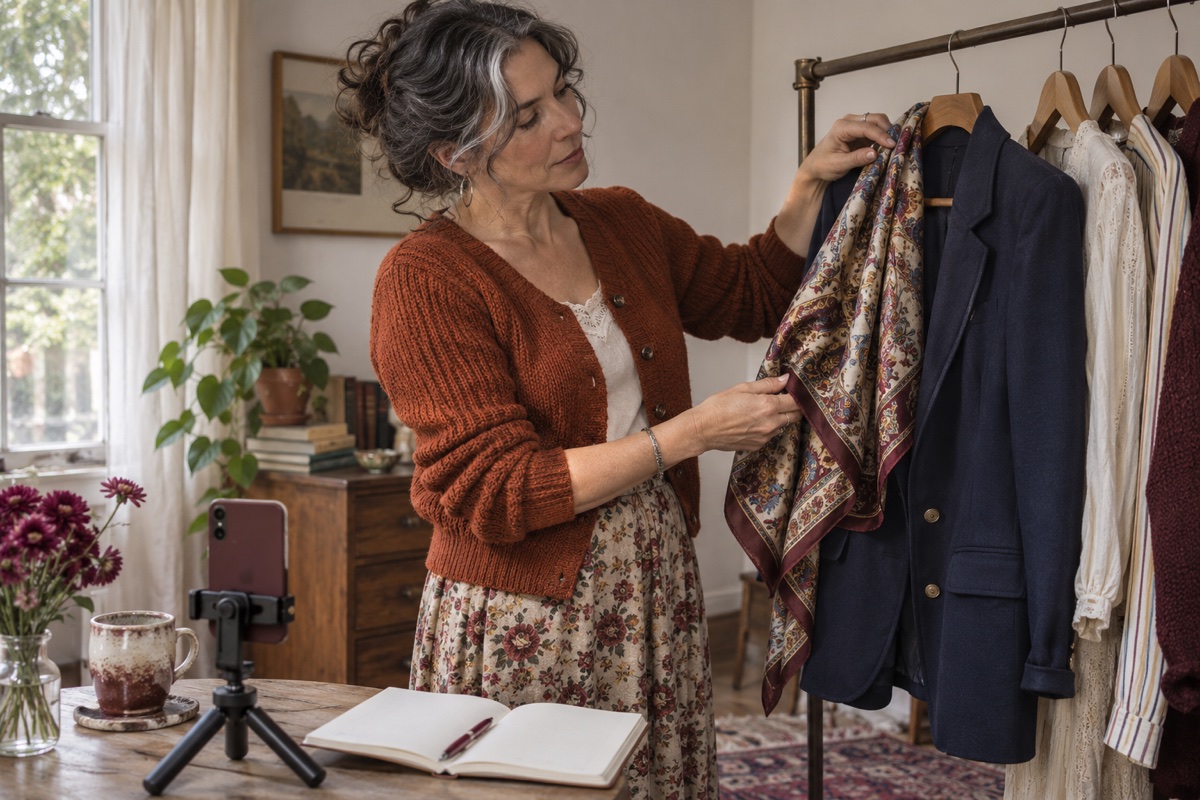
A blazer and a printed scarf are enough to start an outfit story.
Four Posts Hiding in One Closet
Pick one piece you know well, then let the story change around it. Suppose it’s a secondhand navy blazer with roomy sleeves. Your first post can show what you usually wear with it. A later one can show what happened when you took the blazer somewhere different or fixed something that had been bothering you. Repeat the piece across the month so readers can recognize it and compare the results.
| Post | What to show | What to tell |
|---|---|---|
| The regular outfit | Blazer, jeans, and the shoes you walk in | Where you wore it and what made it easy to repeat |
| The rewear test | The same blazer over a printed dress | How a cuff, belt, or shoe swap changed the proportions |
| The thrift find | The label, lining, and sleeve fit | Which details you checked before buying it |
| The small fix | A loose button before and after you secured it | What the repair changed after another day of wear |
That repaired button is worth a paragraph if it kept a jacket in your weekly rotation. Write down what sent you looking for a needle and whether the fix held up. Those details give an ordinary clothes story a beginning and an end.
An outfit starts to tell a story when you can name the decision that made it work.
Fashion Blog Examples Worth Reading Closely
Two Citizen Rosebud outfit posts show how much the setting can change the writing. The Barbour Coat outfit post uses a short studio note and a garment list, including a skirt worn as a top. Snow Day with Bonnet has room for the hill, the cold, and the way several layers came together. The site's feature on Clothes, Cameras & Coffee offers another angle, with the setting and the clothes doing some of the storytelling together.
When you read a popular fashion blog, pick one post and pay attention to the order. Did you see the whole look before its details? Did the author mention how the outfit held up by afternoon? Keep a short note about what helped you understand the look. On your own blog, try that same order with a garment and a story from your life.
What to Capture While You Are Wearing It
Take one full-length shot and check that both the hem and the shoes are in the frame. Then photograph the detail your post is about. For a piece on sleeve fit, a photo with your arm bent tells the reader more than another front-facing pose. Jot down a few notes after you’ve worn the outfit out of the house. That’s when you find out whether the sleeve still rolls up easily or the bag strap keeps sliding off your shoulder.
- A full outfit photo with the shoes visible.
- A close-up of the detail your post explains.
- A side view or movement shot when fit matters.
- The source of each piece, when you remember it.
- One thing you adjusted while wearing the outfit.
Give each photo a short alt description that explains what it adds. “Navy blazer cuff folded back to show the striped lining” helps someone follow the story when the picture is unavailable. If a caption is useful too, give it a different job, such as explaining why you turned up the cuff.
Write down the part you’ll forget once the clothes are back on their hangers.
Give Your First Month a Rhythm
If you want to start a fashion blog alongside everything else you do, plan around the outfit days you already have. A Saturday errand can supply the rewear post, and a Sunday afternoon can supply the repair photos. Set aside a few minutes to draft while the details are fresh. Four posts in a month is one possible pace. Spread them across two months if that gives you time to wear each outfit and write about it properly.
| Week | Publish | Jot down for later |
|---|---|---|
| One | The regular outfit | Which piece you would happily wear twice |
| Two | The rewear test | Which pairing surprised you |
| Three | The thrift find | One detail a reader could look for in a shop |
| Four | The small fix | Whether the garment earned more wear |
What to Check Before You Hit Publish
Open the draft on your phone and read it the way you’d read someone else’s blog. Can you tell from the title what you’ll see? Does the photo show the part the text describes? The site’s guide to starting a style blog covers naming and setting up a blog. Once those pieces are in place, this short check will help your first outfit story stand on its own.
- Name the garment or the outfit decision in the title.
- Say where you wore it or what you tried in the opening.
- Check the photo crop, caption, and alt text on a phone.
- Link back to the earlier outfit when you revisit a piece.
- End with a question readers can answer from their closets.
Start with the piece you wore most last week and tell us what keeps bringing you back to it. Photograph how you wear it now, then save one different pairing for next time. When you look back on the four posts, notice where you had the most to say. You might discover you like writing about repairs as much as outfits, and there’s your next post waiting for you.